Înapoi la știri
Study Reveals an Unexpected Way to Boost Recovery After a Stroke - ScienceAlert
1 oră în urmă
7 minute min
Maria Simionescu
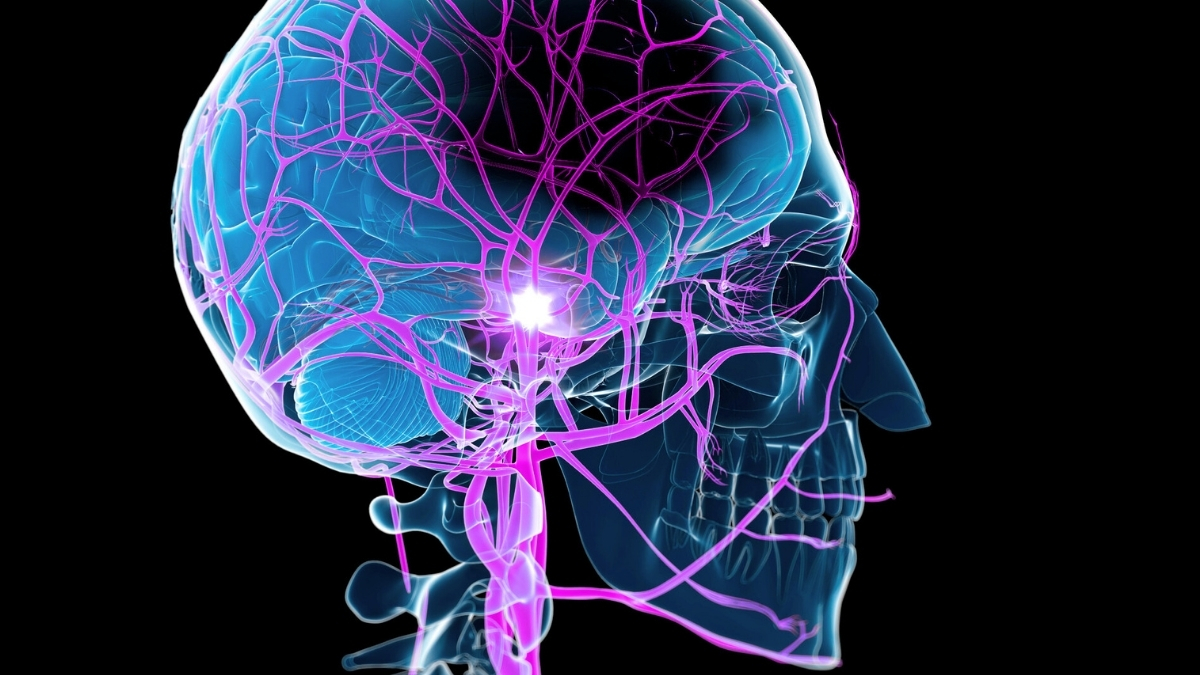
Stroke survivors often face substantial and long-lasting problems with their arms. Both arms often decline together: When one arm is more severely affected by the stroke, the other becomes more difficult to use as well. Compared with a healthy person's dominant hand, a stroke survivor may take up to three times longer to complete everyday tasks using their less-impaired arm. This creates a frustrating reality. People with severe impairment in one arm must rely almost entirely on their other arm for daily activities, such as eating, dressing, and household tasks. When that "good" arm works slowly or awkwardly, even simple activities become tiring and discouraging, and some people may begin to avoid them altogether. But that good arm can be strengthened. In our newly published research in the journal JAMA Neurology, we found that training the less-impaired arm in people living with chronic stroke can improve everyday hand function, in some cases even better than focusing only on the most impaired arm. A stroke occurs when the flow of oxygen-carrying blood to part of the brain is interrupted by a blockage in a blood vessel or by bleeding. Without oxygen, brain cells begin to die. Because each side of the brain mainly controls the opposite side of the body, a stroke often causes movement problems on the side of the body opposite the brain injury. For this reason, stroke rehabilitation has traditionally focused on restoring movement in the most impaired arm. However, research over the past few decades has shown that both sides of the brain contribute to controlling movements for both arms, although they play different roles. As a result, damage to one side of the brain can affect movement on both sides of the body. As expected, the arm opposite the brain injury often has major problems with weakness, stiffness, and voluntary control, limiting its use for reaching, grasping, and manipulating objects. But the other arm, usually thought to be unaffected from the stroke, is frequently not normal either. Many stroke survivors experience reduced strength, slower movements, and poorer coordination in the less-impaired arm. As neuroscientists who study how the brain controls movement after stroke, these findings led us to a simple question: Could training the less-impaired arm help it work better? In a clinical trial of over 50 patients, we studied people living with chronic stroke who had severe impairments in one arm, making it unusable for everyday tasks. These individuals depended almost entirely on their less-impaired arm to manage daily life. Participants were randomly assigned to one of two rehabilitation groups: one that trained their most-impaired arm, and one that trained their less-impaired arm. Both received five weeks of therapy that involved challenging, goal-directed hand movements, including virtual reality tasks designed to improve coordination and timing. Compared to those who trained their most-impaired arm, we found that participants who conditioned their less-impaired arm became faster and more efficient at everyday hand tasks, such as picking up small objects or lifting a cup. These improvements remained six months after training ended. We believe the lasting benefit of training the less-impaired arm may come from a simple feedback loop: When their arm works better, people naturally use it more, and that extra practice in daily life helps lock in those gains. Stroke rehabilitation has long focused on the arm that is most visibly impaired. But for many people, full function in that arm never returns. They adapt and rely on their less-impaired arm to get through the day. "Less-impaired," however, does not mean unaffected. When this arm becomes the sole tool for daily activities, even mild problems can have major consequences for independence and quality of life. Improving how well this arm works could make everyday tasks faster, easier, and less exhausting, even years after a stroke. Related: Huge Study Links 99% of Heart Attacks And Strokes With 4 Risk Factors Future work will focus on how best to combine training of the less-impaired arm with standard therapy for the more-impaired arm, and how these approaches translate into everyday life at home. For many survivors, recovery may not mean restoring what was lost but strengthening what remains. Candice Maenza, Research Project Manager, Associate Director of the Center for Translational Neuromechanics in Rehabilitation, Penn State and Robert Sainburg, Professor of Kinesiology and Neurology, Penn State This article is republished from The Conversation under a Creative Commons license. Read the original article.